

Do I need a pop filter?
The answer to do I need a pop filter when recording, is no if you’re not getting plosive sounds on your recordings.
Plosive sounds are created when you pronounce consonants, particularly p’s and b’s.

These p’s and b’s create pops and distortions on a microphone. If these are exactly the problems you are getting then a pop filter is exactly what you are looking for. If you are just setting up in recording my advice would be to just get one anyway because they are fairly cheap and can stop you from getting the problems as mentioned earlier anyway.
It’s one less thing to worry about when you’re setting up a home recording studio and not all problems with sound will be as cheaply solved! If you are using a condenser microphone you may find that more sensitive to plosive pops than a dynamic microphone.
As with most things in recording you should listen and judge for yourself.
Do I need a pop filter for podcasting
As pop filters reduced the plosive sounds that a microphone produces, you may also need pop filters for podcasting. If you find that there are “loud” plosives on p’s and b’s then a pop filter will give you a better-recorded sound.
Because some singers produce extra volume when performing, plosives can be more of a problem when singing. Some people can still produce quite loud plosive sounds just by talking. Especially some voices and techniques.

What is a pop filter?
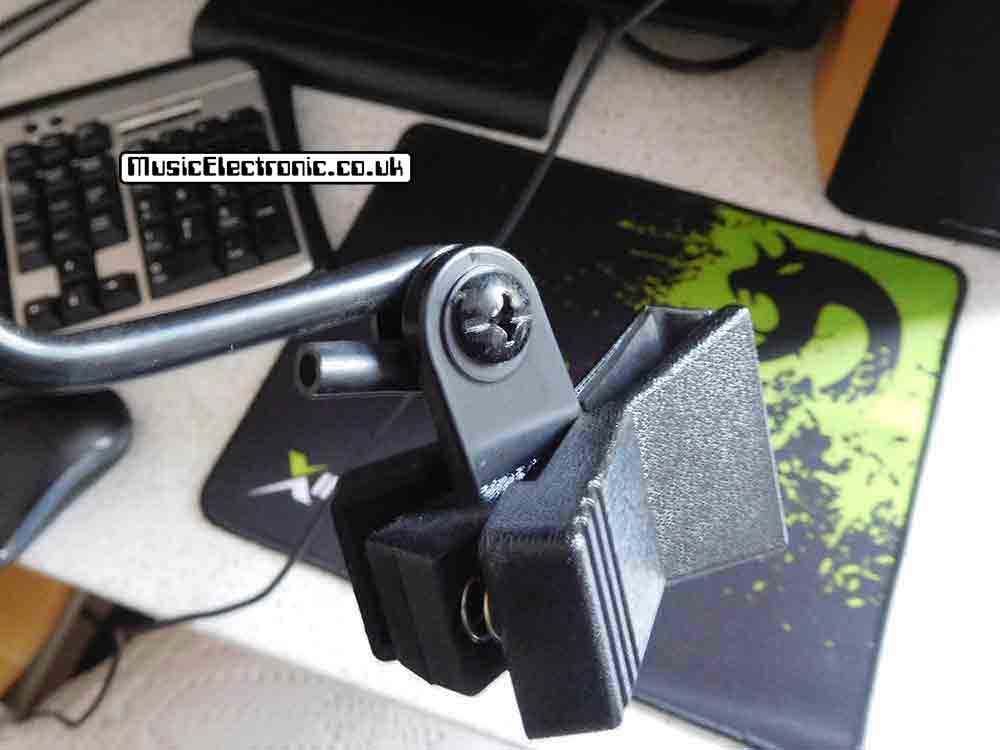
A pop filter is a mechanical device, not an electronic one. It is a fine mesh that attaches to the microphone or stand.
This provides a shield for the large air movements you make when you pronounce the p’s and b’s.

What does it do
It eradicates those distorting overloading sounds on your recordings when you sing or speak. A pop filter is designed to stop the sounds of p’s and b’s causing distortions in the microphone.
These distortions are caused by air movement coming from your mouth when you pronounce some words. Put your hand near your mouth and say the word “popular”. You will feel the air move.
This moving air isn’t good for a microphone recording. It tries to pick up the “normal” air movements that sound makes but these violent sudden bursts get recorded and sound like loud, bass-heavy pops. You don’t want these in vocal recordings.

While on the subject of vocal recordings, this technique provides unexpectedly good results and is my method of vocal recording.
Tips:-
With recording, it’s all about using your ears to make decisions. Don’t be afraid to ignore what’s advised.
Try a pop filter to hear if it makes a difference. Change the position of it a listen back to the results.
Advantages of a pop filter
For me the advantages of a pop filter far outway the disadvantages. Before I used one I would get these pop sounds. Some singers don’t produce them, or not as loud as I did.
I know some singers are more controlled and move away from the microphone or move to the side for some lines and phrases. I tend to get carried away in the performance and I’m not as controlled. It’s not much fun recording a great performance and finding it ruined because of these pops.
The pop filter gives me the assurance that if I produce a good vocal performance, I don’t have to worry about the recording. As a by-product, it also stops me from getting too close to the microphone. Another problem I suffered with.
So for me, it’s a win-win and a no-brainer choice. On a practical level, it also stops particles of spit from getting on the microphone.
Disadvantages of a pop filter
The major disadvantage of a pop filter is if it’s positioned with a large gap between the microphone and the filter it will stop the proximity effect.
This is a side effect of most microphones in which the bass response increases as you get closer to it. This side effect has been used as an effect by many vocalists over the years as it produces a more bassy and intimate sound. A vocalist will sing a line or phrase and then lean into the mic for the proximity effect.
This is another one of those things where an unwanted side effect produced by audio equipment is used as an advantage. Like overdriven amplifiers.
Other techniques to remove plosives
As you probably already know, it’s much better to start with a good sound than to try to get rid of problems later. Sometimes however there’s no alternative. Especially if you’re left with a recording that can’t be redone and contains plosive sounds so what can you do?
You can do various things. You can reduce the sounds by using EQ. This will of course affect the whole track. However, you can automate most things these days so you can try to just tweak the offending frequencies as they occur by automating the controls.
At this point, I also should mention the Isotope RX audio tools software. If you’ve ever seen this or tried it you’ll already know how good it can be. I’ll admit, until I tried it I thought its claims were impossible, but it does the almost impossible and can remove certain sounds without noticeably affecting others.
You might have seen it remove vocals from tracks or remove the track from the vocals. It all seems impossible but this is the best thing I’ve ever seen for removing stuff from audio that you don’t want to be there. It is expensive but pretty incredible all the same!
Built-in pop filters or shields
Some microphones have pop filters built in. In my experience, a separate pop shield works better but sometimes these built-in ones will be all you need.
It all comes down to experimenting and listening to the results. I’d say it’s the same with microphones some will e more susceptible to plosives than others. Again it all comes down to experimenting and positioning. Positioning the microphone at an angle will reduce plosives as you’re not directing your full force into it.
It does however have some effect on the sound so you’ll have to try it to see how it sounds in your studio with your particular mics.
Make your own pop filter
For some reason, there seems to be some fascination for DIY pop filters for home studios. Now if they were to cost a lot I could see the attraction but at the price, you can buy them for why bother?
Do I need a pop filter: final thoughts
With the low cost of a pop shield, it’s not worth spending too much time worrying about whether to get one or not. If you only record your own voice and you don’t make these plosive sounds then you don’t need to worry.
If you’re like me though and sometimes get a bit close to the mic or get a bit ever excited during a performance it’s best to get one. Then you won’t ruin a great performance.
If you record other vocalists again it’s probably best to get one as you don’t know how they sound.
You can try to remove microphone popping sounds, but like most recordings, it’s better not to have stuff you don’t want in the first place. You could of course try the Isotope RX audio tools.
This is the exception for me. When it comes to removing sounds this is excellent and doesn’t cause side effects or compromise your audio quality.
If it saves one in ten vocal recordings it’s worth it for me (It definitely saves at least that amount)
I would also suggest you use a microphone stand. this will get rid of any handling noise that might occur. You want to get the clearest, cleanest audio signal, as free from background noise and any other sounds as possible. This will give you the best sound quality for your music.