
Workstations vs arrangers
What’s the best for you? Workstations vs arrangers. First, you need to know what the differences are.
The biggest thing that separates one from the other is arrangers feature auto-accompaniment as one of their main characteristics.
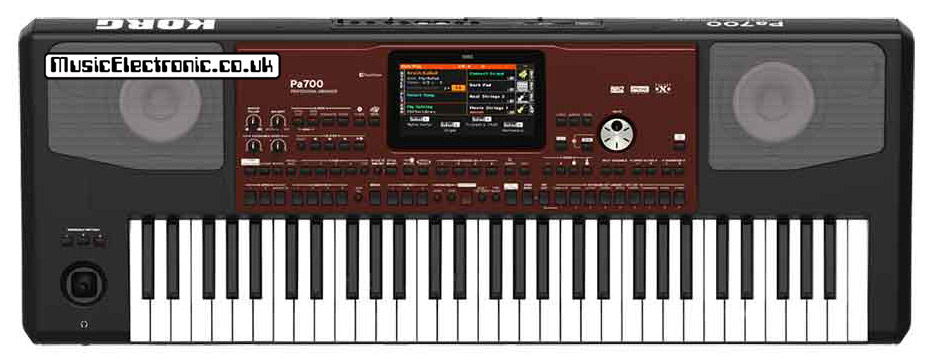
There is some overlap between workstations and arrangers so describing all the differences is not that straightforward. You need to know each typical feature and what each is best at to decide which is the best choice for you.
Secondly, there is no real which is better workstation synthesizer vs arranger keyboard battle. They are both excellent at different things so it’s a question of which is best for you.
What is a workstation?
A workstation looks just like a keyboard synthesizer.
It’s what’s inside it that makes it different from a synthesizer.
A synthesizer generally enables you to create and play sounds. They can be monophonic or polyphonic. A monophonic synth can only play one note at once, like a trumpet or the human voice.
Some can be multi-timbral which means they can play more than one sound simultaneously. Some will contain effects processors to add reverb, echo and chorus to further enhance the sound.
A workstation generally enables you to create and play sounds like a synthesizer. They are polyphonic and multi-timbral. They have drum and percussion sounds and a sequencer or recorder. Most also have effects processors to enhance the sounds and a mixing section to combine everything together.
A workstation enables you to create complete songs without having to use or connect anything extra up to it.
In terms of appearance, workstations usually have quite large displays on their front panels. This is to aid with all the editing and arranging of the music.
It may be OK to have a small or even no display when creating and editing sounds but you really need to see what you are doing recording whole songs.
What is an arranger?
An arranger may look almost the same as a workstation synthesizer.
They also have the capability to produce complete songs, but they concentrate more on the compositional aspect of the music rather than the finished recording. That’s not to say that what they produce doesn’t sound as good as a workstation.
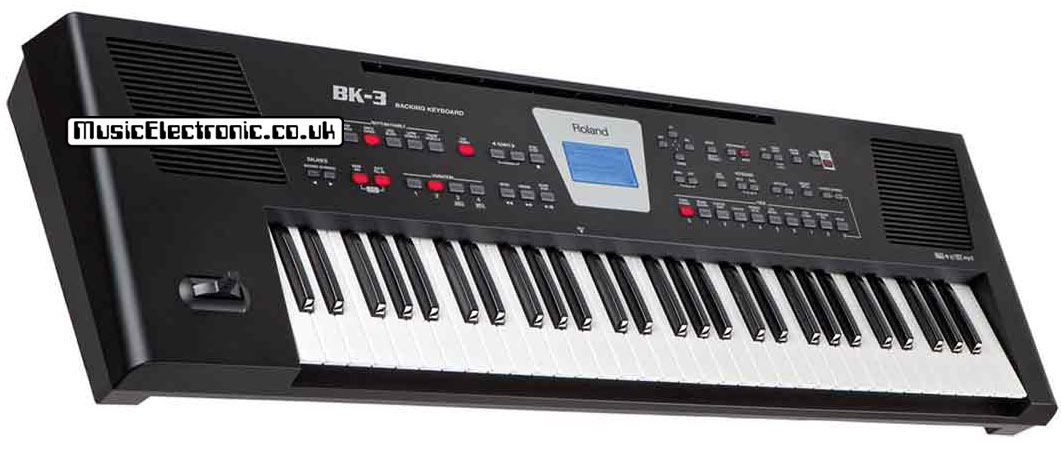
If you remember those Casio keyboards that used to have auto accompaniment on them. Think of the best one you could imagine and make the auto accompaniment a hundred times better and sound like a band that plays along with you in any style you want. You are starting to get an idea of what an arranger can do.
As I said earlier this is a bit of a generalisation and there is an overlap and of course, different models have different features.
Workstations vs arrangers live
Both of these instruments are ideal for live use and yet again there is a large overlap and generalisations.
In a band, a workstation is ideal as lots of things can be prepared before a performance and you can get set lists and songs ready at the touch of a button.
You can use the sequencing, multi-timbral sounds and effects for anything you want and have preprogrammed backing tracks to play as much as or as little live as you want.

An arranger is also an ideal live instrument, especially for one person as they can sound like a complete band with the auto arranger.
A decent keyboard player can also sound like a complete band and switch musical styles live without any preprogramming.
In my opinion, keyboard players with some formal musical training can get a lot more out of an arranger due to the transcription pages and such where you need to know a bit about music theory.
If you don’t know your a# major from your c# minor then you might be better off with a workstation.
That’s not to say that someone without much experience can’t press a few buttons and get something sounding really impressive from arranger keyboards too.
Workstations vs arrangers for performances
Hopefully, this article has explained the differences between the two instruments and shown which is more suitable for you.
In my opinion, arrangers enable songwriters and musicians to be able to fully explore their ideas and creations quickly. Which is what you want in the moment of creation.
They also tend to have a lot of dedicated buttons to quickly get to functions and make them playable. You don’t want to be trying to find a feature buried away under layers of multiple menus to quickly transpose a part or try out a different style.
With an arranger, you can create the sound of a backing band with the press of a button and have them follow your every note.
Workstation vs arrangers summing up
A workstation is more suitable for someone coming from a synthesizer and sequencer background who wants to turn an idea into a finished track.
That’s not to say you can’t write songs on a workstation because many people use them exactly for that. Workstations generally don’t have the auto accompaniment features that an arranger has.
A workstation would also be more useful in a recording studio for music production.
If you are interested in workstations check out my post on workstations for more information. There is a particularly good Korg workstation at a very good price.